










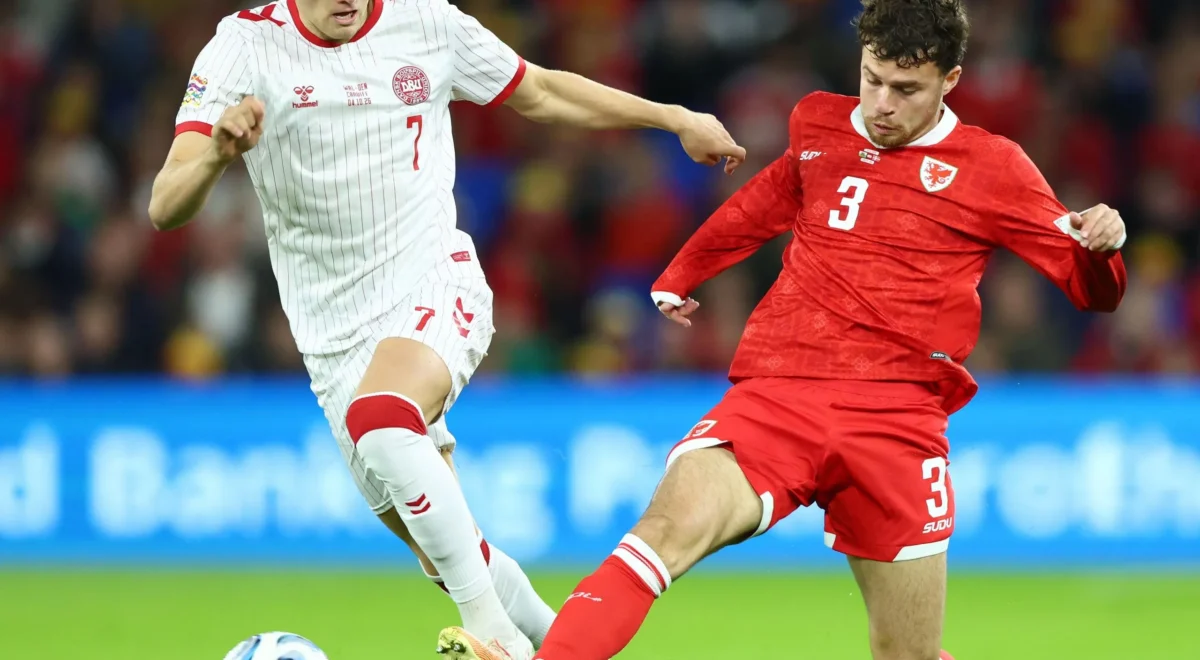
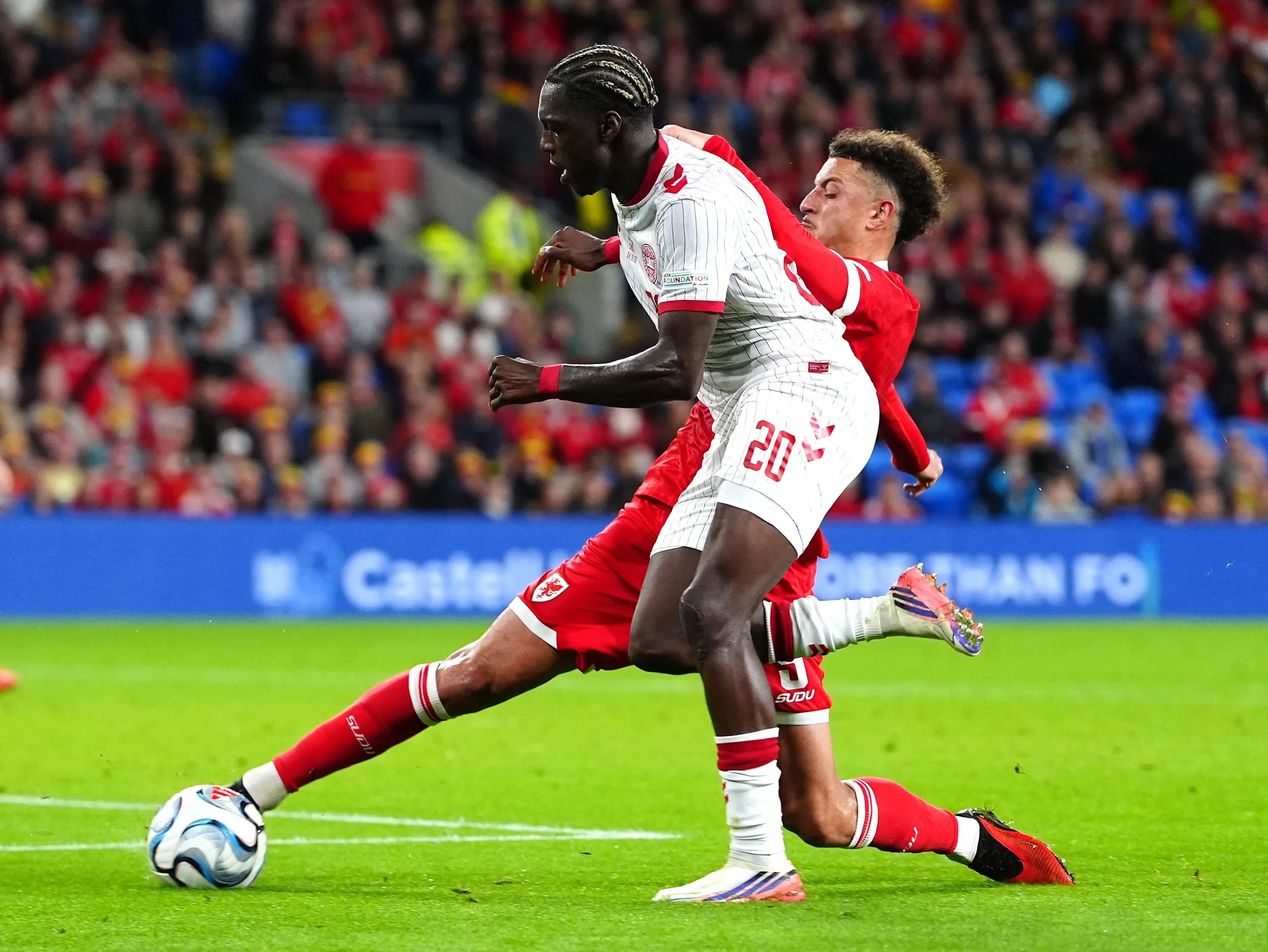
50 min: WHAT A SAVE! How did Ward manage to keep it level for Wales? From about a meter out, Højlund launched himself at a cross from the right. He shot at goal – how could he not score from there – but Ward’s outstretched left leg prevented the ball from going in. A superb save!
I just rewatched Kristoffer Ajer’s stunning shot for Norway.
His teammates couldn’t believe it!
45 min: We are back in Cardiff. Wales needs to show a bit more dynamism with the ball. Ampadu makes a tackle on the impressive Daramy near the touchline. The energy of Wales without the ball is undeniable. It’s time to see some quality with the ball.
After a brief overview, here’s a status update on the matches.
Portugal vs Norway: Norway took the lead through Kristoffer Ajer, but Portugal responded almost immediately through Joao Cancelo. This quick exchange turned a match that seemed to be heading towards a tactical battle into a more open contest.
Netherlands vs Serbia: Teun Koopmeiners put the Netherlands ahead, but Serbia equalized four minutes later through Mihajlo Cvetković. This led to an entertaining first half where the Dutch found a gap but failed to capitalize.
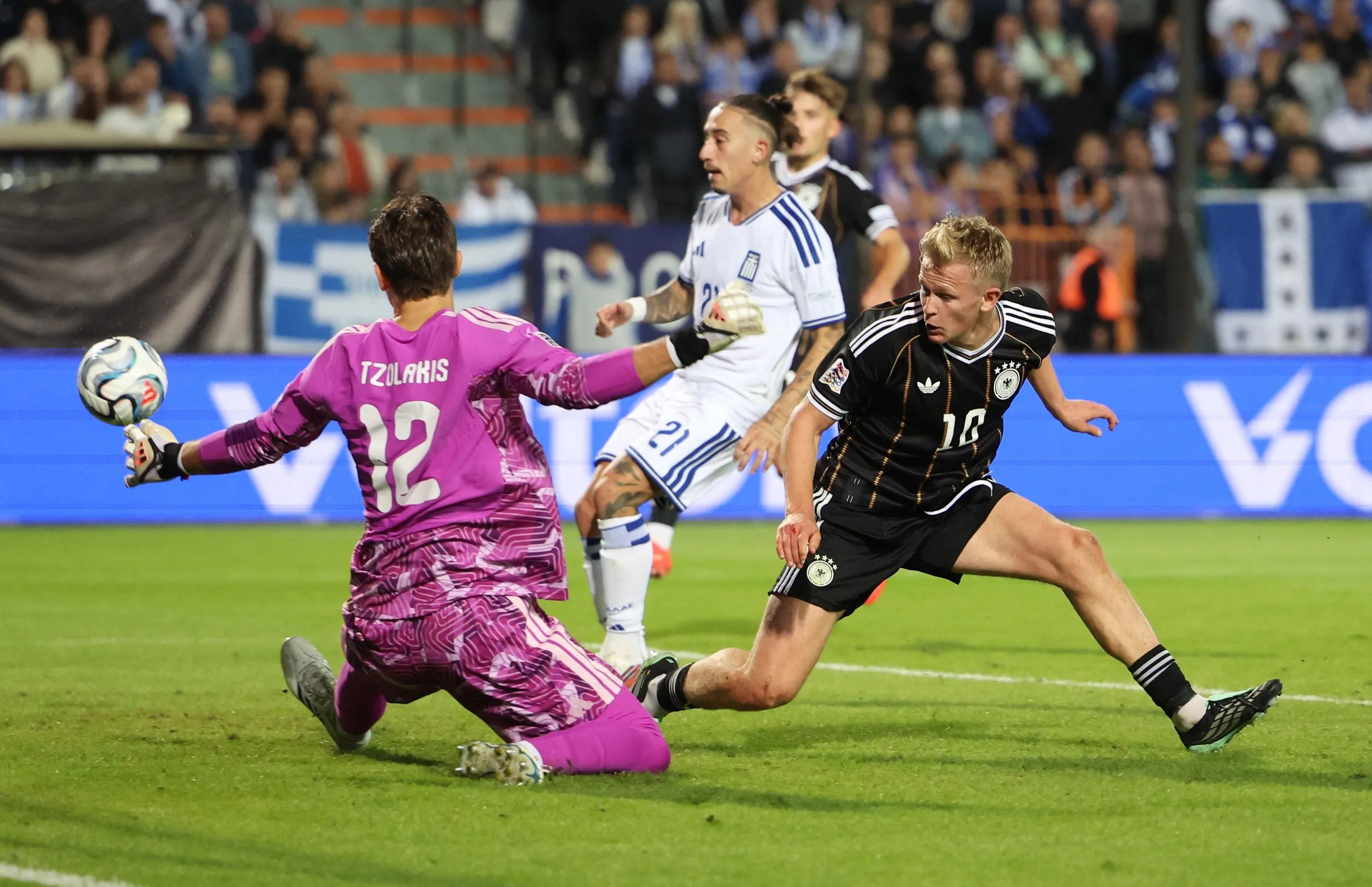
Greece vs Germany: Germany thought they had taken the lead through Jonathan Burkardt, but VAR ruled the goal out. Greece had to withstand pressure, with Kostas Tzolakis called into action very early; the disallowed goal will be seen as a breath of fresh air, but Germany is finding openings and looks to be the dominant side.
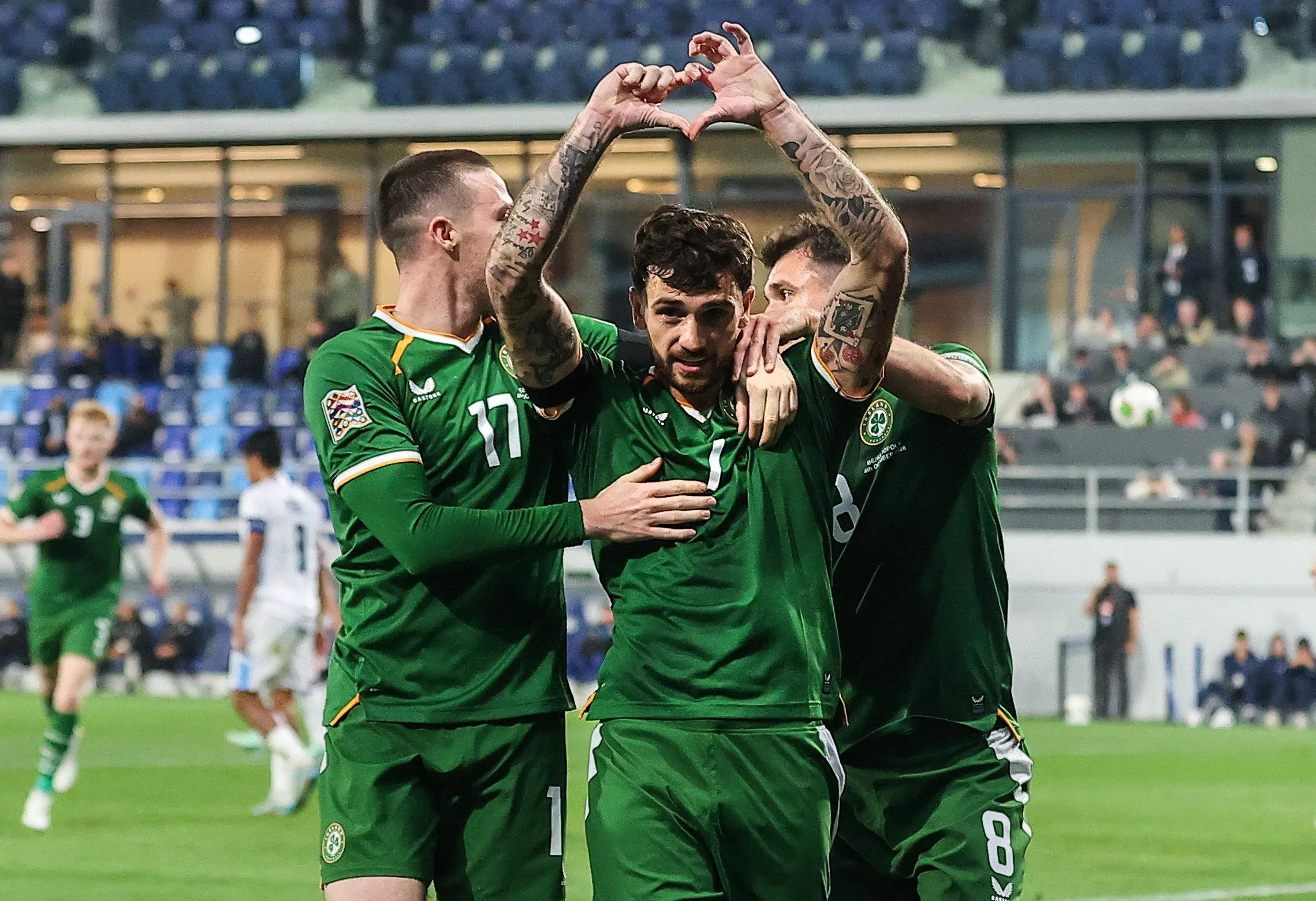
Republic of Ireland vs Israel: Troy Parrott’s penalty gave Ireland the lead in this behind-closed-doors match in Serbia.
Wales vs Denmark: Wales started strong, with Brennan Johnson converting a cross from Daniel James and the hosts finding space on the left. Denmark gradually took control and threatened through Rasmus Højlund and Gustav Isaksen, but the early withdrawal of Pierre-Emile Højbjerg due to injury disrupted their midfield. A goalless first half seems fair.
The only mitigating factor in the penalty claim is that Isaksen managed to shoot just before being fouled.
Andy Flintoff reached out (no, not that one, as he specifies in his email signature):
“That tackle by Ben Davies on Isaksen would have been called a foul anywhere else on the pitch – had it been the other way around (Isaksen on Davies), the referee would have awarded a penalty. So why wasn’t it given? It was a late tackle, on Isaksen’s standing leg, after the ball had already gone.
Defenders seem to get away with a lot more when the attacker is in the act of shooting.”
I think I agree. He was clearly hit from behind. Of course, they had to check. I’m surprised it wasn’t overturned.
44 min: Denmark has a free kick just outside the Welsh box. Isaksen takes it, but fails to get it over the wall. However, he quickly regains the ball and sends a cross to the far post where he finds Provstgaard. Admittedly, he had company, but he managed to get his head on the ball and probably should have hit the target from so close, instead of sending his shot over the bar.
I don’t understand how Denmark isn’t ahead here.
Bang, bang! Norway has taken the lead in Porto after Ajer struck a lovely half-volley (I’ll let you debate that among yourselves), but the hosts equalized almost immediately through Joao Cancelo, who scored with a powerful shot into the net.
Who else?! From the penalty spot, Troy Parrott scores the goal that gives his country the lead.
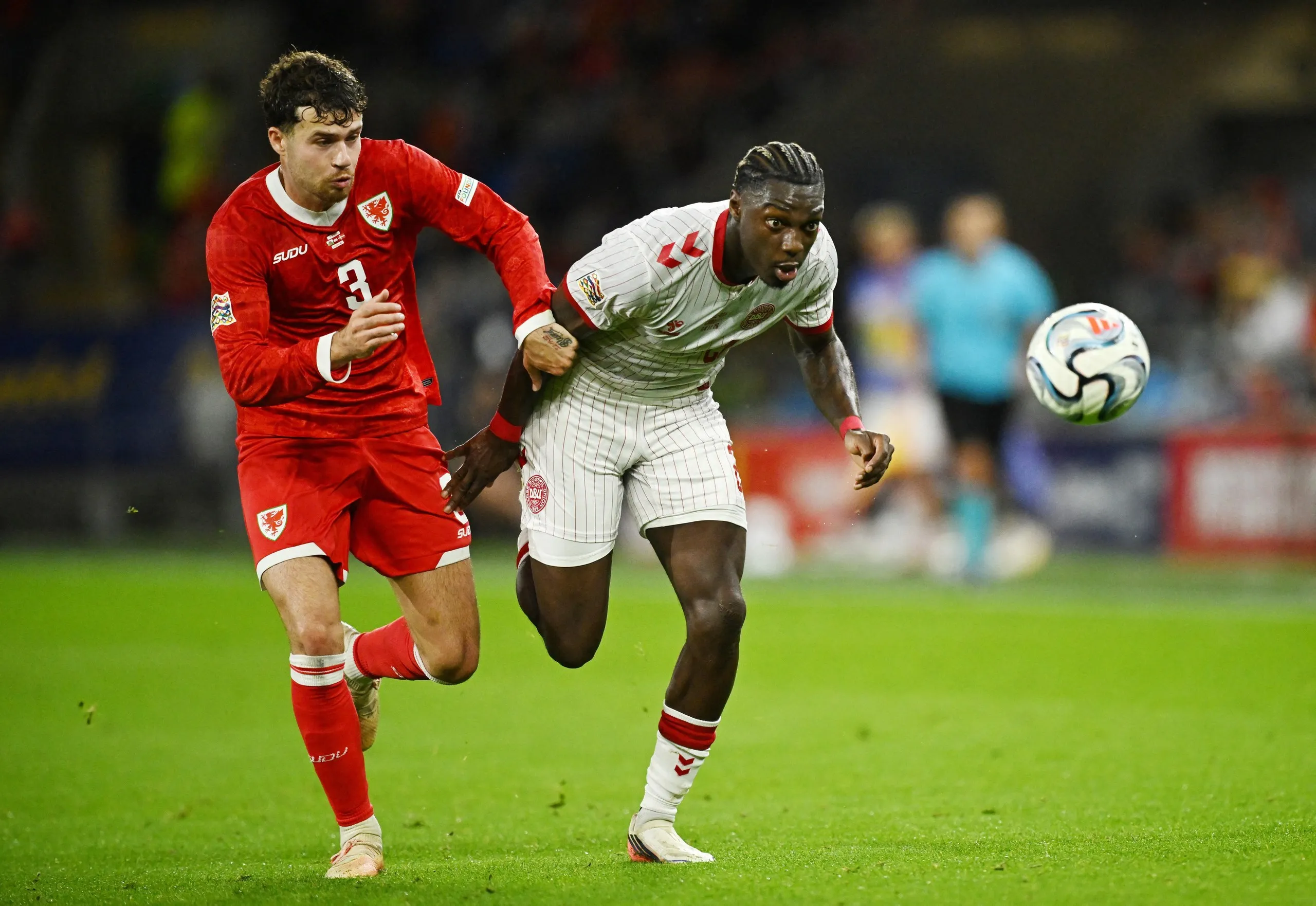
39 min: Ampadu has to intervene and make a smart tackle in his box after a slaloming run from Daramy, who passed a few defenders and surged towards the goal line. It went out for a corner. But a big header from Davies clears the danger.
VAR has the final word in Thessaloniki! Germany presses but has to wait for their opening goal.
Goals are falling now! The Dutch held their lead for four minutes before the Serbs came back strong. Cvetkovic missed – it wasn’t quite a golden opportunity – a bit earlier. But now, he has scored.
And another one! The goals in the Nations League on Sunday night are like London buses, apparently.
We have our first goal! The Netherlands takes the lead against Serbia.
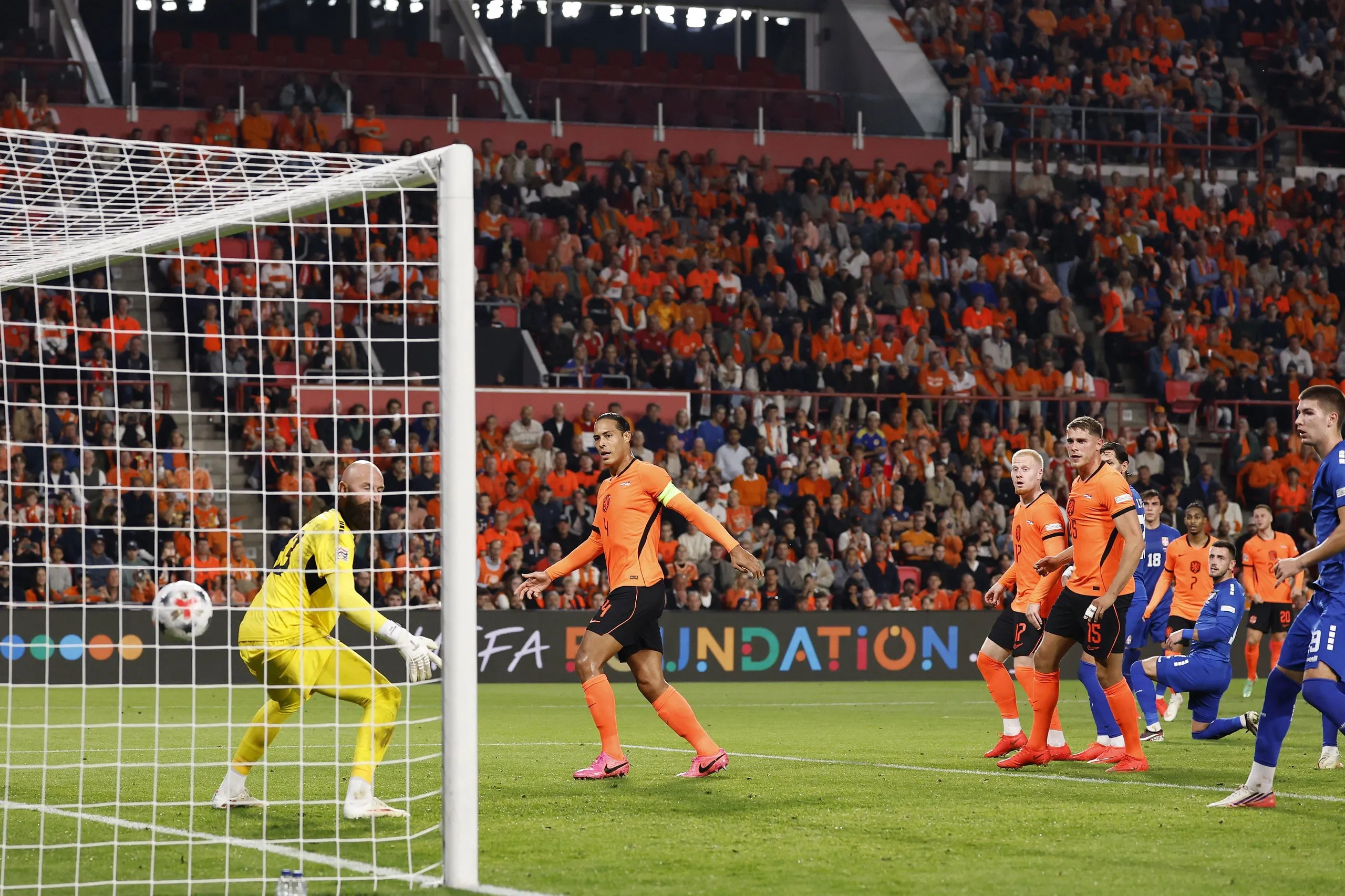
But alas! Still no goals in the five matches!
Can someone step up?
A lovely ball from the right by Isaksen fails to find Hojlund at the far post.
Shortly after, Cullen receives a yellow card. Bellamy looks puzzled, he and others think the card should have gone to Mæhle after the two clashed in a robust duel.
28 min: Things have opened up a bit in Cardiff. Denmark seems to be enjoying a bit more of the ball.
In Serbia, Israel works a short corner, but Azoulay sends it over.
Back in Cardiff, Hojlund’s run into the box seems to split the Welsh defense. He passes to Isaksen who fails to clear, and his shot is off target. But was he fouled from behind? The referee says no and there’s no penalty despite the appeals.
20 min: Wales earns a corner after excellent work from Johnson on the left that takes him to the goal line. His cross barely finds Koumas, but the turn shot is blocked. The corner yields nothing, but they regain possession and build from the back.
18 min: Denmark is enjoying its longest spell of possession, but they are still far from the Welsh goal. They circulate the ball before forcing a corner taken by Isaksen at the far post. Dasilva did an excellent job to clear the ball from five Danes at the angle of his own box, but he couldn’t release the ball in time to launch a counter. A very cautious start to the match.
12 min: Still no goals in the five matches. Although Germany forced Tzolakis into a save.
12 min: Wales is exploiting its left side and the cross from that channel towards the far post promises to open the scoring.
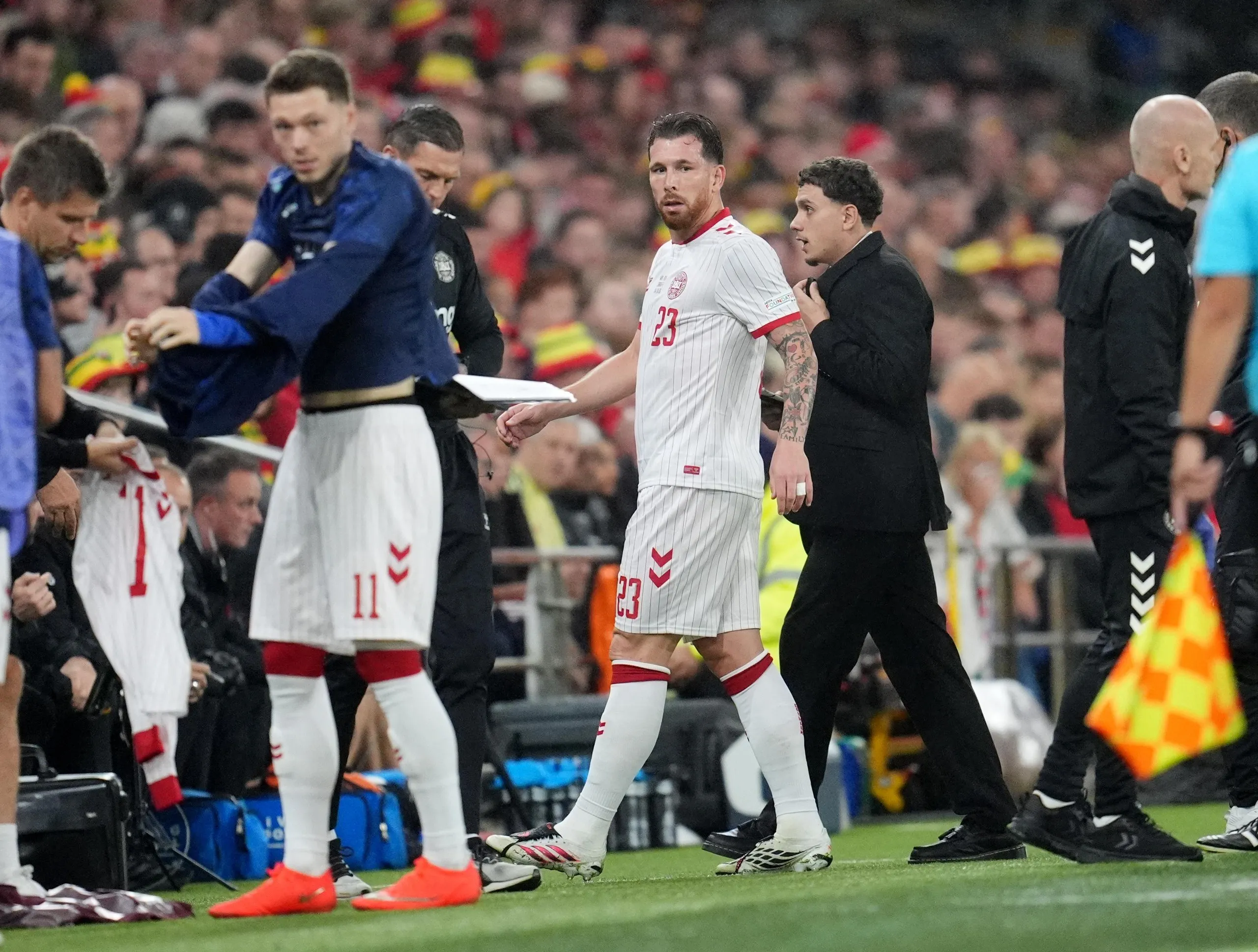
9 min: Bad news for Danish captain Pierre-Emile Højbjerg who goes off with an injury.
Wales is clearly the better of the two sides at the start of the match. James sends a cross to the far post that Johnson volleys, but the angle is too tight and in the end, it’s neither a shot on target nor a cross for a teammate. Everyone applauds as the men in red begin to find their rhythm.
On the pitch, Ampadu shoots for Wales from distance after a nice run from James who sped on a long pass.
Nothing doing, however.
No goals have been scored in the five matches after about six minutes.
Hello Norrie Hernon. I hope you are well. What are your thoughts? “The accusation that an Irish player called an Israeli player a ‘monkey’ is completely unfounded, and the FAI is investigating whether ‘monkey’ chants were directed at Adam Ida by Israeli supporters during last Sunday’s match. I don’t know if this is deliberate misdirection, but it seems more than coincidental. Thank you.” Absolutely. I don’t believe it for a second. If there had been any basis for it, the players themselves would have reported it. It was simply a ‘journalist’ trying to create a story. What they have managed to do, I suppose.
The Welsh anthem is sung on television.
It’s always a pleasure to report. If you’ve never heard it live in a sports stadium with thousands of Welsh – who all seem to have the voice of an angel – you must absolutely remedy that.
Five minutes before kick-off.
Here are some quick stats and facts:
Greece vs Germany
The 1-0 victory for Greece in the previous encounter was their first win against Germany in 11 meetings. Dimitris Kourbelis scored the only goal.
Greece leads the group with seven points from three matches; Germany is third with four points.
Germany comes off a 2-0 victory against Serbia, their first win under Jürgen Klopp.
Netherlands vs Serbia
The Netherlands won 2-1 in Belgrade last month, with Mexx Meerdink scoring twice, including the winning goal.
Meerdink’s double came in his first international start, only his second senior appearance for the Netherlands.
Serbia has lost all three of its group matches so far, while the Netherlands remains unbeaten with one win and two draws.
Portugal vs Norway
Portugal has won all three of its group matches and leads Group A4 with nine points.
The two teams have met once in this Nations League: Portugal won 2-1 in Oslo, with João Félix and Gonçalo Ramos scoring.
Norway’s Erling Haaland has scored three goals in the group so far.
Wales vs Denmark
Denmark defeated Wales 2-0 in Copenhagen last month, with Ben Davies scoring from a cross by Mikkel Damsgaard before Gustav Isaksen added another.
Wales bounced back with a 2-1 victory against Norway on Thursday, their first win of the group campaign.
Denmark has won eight of the twelve encounters between the two teams, with Wales winning four; they have never drawn.
Republic of Ireland vs Israel
Ireland won the first encounter 3-0 last week, scoring three goals in the first 25 minutes.
Troy Parrott has scored three times in Ireland’s last two matches: once against Israel, then twice against Austria.
The match is being played behind closed doors at a neutral venue in Bačka Topola, Serbia, after being moved from Dublin.
Ronaldo may have left the pitch in anger, but he remains the best player his country has ever produced.
Bruno Fernandes claims that the outburst does not tarnish Ronaldo’s legacy:
Our first correspondence of the evening is an important warning from Colm Dowling:
“The two ‘journalists’ who asked those questions to the Irish manager would have been excluded by UEFA from the post-match press conference by the Irish Independent and it seems one of them was unhappy and went down from the press box to confront the UEFA official.”
Three matches have already finished in this Nations League today.
Not exactly thrilling, is it?
Of course, football has taken a back seat in the narrative surrounding the Ireland-Israel match.
Yesterday, a truly remarkable press conference was interrupted when an Israeli journalist asked Ireland’s coach, Heimir Hallgrímsson, for his thoughts on the attempted hijacking of a flydubai flight from the Emirates to Israel.
Another Israeli journalist then accused Irish players of calling Israeli players ‘monkeys’ during their last encounter. An FAI official repeatedly insisted that this claim was ‘completely false’ before the microphone was taken away from the reporter.
A week after beating Israel 3-0, Ireland faces them again in a match that has been moved to Serbia and will be played behind closed doors.
Troy Parrott and Adam Idah are both starting, with Jack Moylan behind them. Ireland’s captain, Dara O’Shea, is absent after the birth of his child.
Republic of Ireland 3-5-1-1: Caoimhín Kelleher; Jake O’Brien, Jimmy Dunne, Liam Scales; Ryan Manning, Jayson Molumby, Conor Coventry, Jack Moylan, Jason Knight; Adam Idah; Troy Parrott.
Substitutes: Max O’Leary, Josh Keeley, Liam Kitching, Joel Bagan, John Egan, Mohammed ‘Bosun’ Lawal, Finn Azaz, Rocco Vata, Killian Phillips, Thomas Cannon, Owen Elding, Chiedozie Ogbene.
Israel is making its own changes, with Assaf Tzur in goal and Dor Turgeman in attack. Manor Solomon and Oscar Gloukh are among the attacking options on the bench.
Israel 4-3-2-1: Assaf Tzur; Ilay Feingold, Nikita Stoinov, Idan Nachmias, Roy Revivo; Dor Peretz, Ethane Azoulay, Eliel Peretz; Liel Abada, Oscar Gloukh; Dor Turgeman.
Substitutes: Niv Eliasi, Omri Glazer, Eli Dasa, Raz Shlomo, Guy Mizrahi, Omri Gandelman, Manor Solomon, Yarin Levi, Gabi Kanichowsky, Yarden Shua, Tai Baribo, Saied Abu Farchi.
The Netherlands defeated Serbia 2-1 in Belgrade last month, but the hosts had to fight: Mexx Meerdink scored twice, with the winning goal coming late.
Xavi’s side is making changes again, with Noa Lang and Teun Koopmeiners starting.
Netherlands 4-3-3: Bart Verbruggen; Denzel Dumfries, Virgil van Dijk (c), Teun Koopmeiners, Micky van de Ven; Ryan Gravenberch, Joey Veerman, Tijjani Reijnders; Crysencio Summerville, Mexx Meerdink, Noa Lang.
Substitutes: Robin Roefs, Mark Flekken, Jeremie Frimpong, Jorrel Hato, Nathan Aké, Jurriën Timber, Quinten Timber, Guus Til, Kenneth Taylor, Gjivai Zechiël, Joshua Zirkzee, Ruben van Bommel.
Serbia is still looking for its first points and hopes that the return of Dušan Tadić, 37, could inspire an improvement in the team’s performances.
Serbia: Vanja Milinković-Savić; Kosta Nedeljković, Srđan Babić, Strahinja Pavlović, Aleksa Terzić; Nemanja Gudelj, Saša Lukić, Aleksandar Stanković, Lazar Samardžić; Mihajlo Cvetković, Dušan Tadić.
Substitutes: Djordje Petrović, Filip Stanković, Ognjen Mimović, Filip Kostić, Nikola Simić, Strahinja Eraković, Nemanja Maksimović, Stefan Džodić, Vasilije Kostov, Luka Jović, Dejan Joveljić, Andrija Živković.
Greece has already made history against Germany in this Nations League, winning their first victory against them in the reverse fixture.
Now they are back in Thessaloniki, with the chance to strengthen their grip on a group they surprisingly lead.
Greece: Kostas Tzolakis; Manolis Saliakas, Ntinos Mavropanos, Konstantinos Koulierakis, Kostas Tsimikas; Giorgos Masouras, Dimitris Kourbelis, Christos Zafeiris, Alexandros Kyziridis; Vangelis Pavlidis, Fotis Ioannidis.
Substitutes: Odysseas Vlachodimos, Christos Mandas, Triantafyllos Tsapras, Panagiotis Retsos, Giannis Michailidis, Giorgos Kyriakopoulos, Dimitris Pelkas, Thanasis Androutsos, Christos Mouzakitis, Charalampos Kostoulas, Tasos Douvikas, Konstantinos Karetsas.
Jürgen Klopp and Germany arrive buoyed by their first victory under his management, but the young team faces a tougher test in a noisy Toumba stadium, with 18-year-old Lennart Karl starting for the first time.
Florian Wirtz is the captain of a team whose average age barely reaches 24 years. Jonas Urbig retains his place in goal, with David Raum coming in as left-back.
Germany 4-2-3-1: Jonas Urbig; Philipp Treu, Malick Thiaw, Waldemar Anton, David Raum; Aleksandar Pavlović, Tom Bischof; Lennart Karl, Florian Wirtz (c), Derry Scherhant; Jonathan Burkardt.
Substitutes: Finn Dahmen, Noah Atubolu, Finn Jeltsch, Ridle Baku, Maximilian Mittelstädt, Yannik Engelhardt, Said El Mala, Mika Baur, Bambasé Conté, Felix Keidel, Vitaly Janelt, Nick Woltemade.
Is this a new beginning for Portuguese football?
For the first time since making his debut 22 years ago, a fit Cristiano Ronaldo is not part of his nation’s squad.
This means Bruno Fernandes, captain of Manchester United, takes the armband. Perhaps we will see the ten outfield players do more than just jog?
Portugal 4-1-3-2: Diogo Costa; João Cancelo, Rúben Dias, Renato Veiga, Nuno Mendes; João Palhinha; Francisco Conceição, Vitinha, Bruno Fernandes; João Félix, Gonçalo Ramos.
Substitutes: Rui Silva, Samuel Soares, Diogo Dalot, Tomás Araújo, Nuno Tavares, João Neves, Rúben Neves, Bernardo Silva, Rafael Leão, Francisco Trincão, Pedro Neto, Fábio Silva.
Norway can at least count on its superstar up front, but does Erling Haaland think about his club’s problems?
Norway 4-3-3: Ørjan Nyland; Marcus Pedersen, Kristoffer Ajer, Leo Østigård, David Møller Wolfe; Sander Berge, Patrick Berg, Martin Ødegaard; Oscar Bobb, Erling Haaland, Antonio Nusa.
Substitutes: Sander Tangvik, Egil Selvik, Fredrik Sjøvold, Sondre Langås, Fredrik Aursnes, Thelo Aasgaard, Jørgen Strand Larsen, Didrik Blomberg, Kristian Thorstvedt, Andreas Schjelderup, Erik Botheim, Odin Bjørtuft.
Three changes for Wales compared to the team that lost 2-0 to Denmark last month.
Neco Williams, Ben Cabango, and Kieffer Moore enter Craig Bellamy’s starting eleven. Moore leads the attack, with Brennan Johnson and Sorba Thomas providing support on the wings.
Wales 4-2-3-1: Danny Ward; Neco Williams, Ben Cabango, Ben Davies (c), Jay Dasilva; Ethan Ampadu, Jordan James; Sorba Thomas, Liam Cullen, Brennan Johnson; Lewis Koumas.
Substitutes: David Cornell, Tom King, Chris Mepham, Connor Roberts, Jayden Lienou, Cian Ashford, Daniel James, Joshua Sheehan, Joel Colwill, Wes Burns, Kieffer Moore, Mark Harris.
Denmark 4-3-3: Mads Hermansen; Rasmus Kristensen, Joachim Andersen, Oliver Provstgaard, Joakim Mæhle; Victor Froholdt, Morten Hjulmand, Pierre-Emile Højbjerg; Gustav Isaksen, Rasmus Højlund, Andreas Skov Olsen.
Substitutes: Andreas Jungdal, Filip Jørgensen, Lucas Høgsberg, Victor Nelsson, Anton Gaaei, Thomas Jørgensen, Mads Bidstrup, Mohamed Daramy, Mathias Kvistgaarden, Adam Daghim, Kasper Høgh.
In a normal world, a meaningless friendly match – sorry to the Nations League enthusiasts – between the teams ranked 54th and 77th in the FIFA rankings wouldn’t warrant a glance.
But in this world, where bombs fall on hospitals and children die of hunger, the encounter between the Republic of Ireland and Israel takes on significance that transcends the trivialities of a football match.
What can we say that hasn’t already been said? Should it even take place? Do athletes have a moral obligation to take a stand when their country’s politicians have done little to protect them? Is a footballer complicit in the war crimes committed in their name? Or is it possible to set aside the mass graves and human rights violations for a moment to wonder how Nikita Stoinov of Dinamo Bucharest will handle the runs of Troy Parrott?
Football can be an escape from madness, but sometimes it shines a light on that madness. To borrow another cliché, this afternoon will be a bit of both.
There are other enticing matches as well. A Portugal without Ronaldo begins a new era, while Wales has the chance to showcase its game in front of its home crowd. Perhaps these matches will provide enough narratives to avoid difficult conversations elsewhere.
Feel free to write with your thoughts, whether gargantuan or minuscule. I will read every email that comes my way and do my best to maintain civil dialogue.